
“I Can’t Leave My Desk”: Jeffrey Escobar on the Six Words That Went National
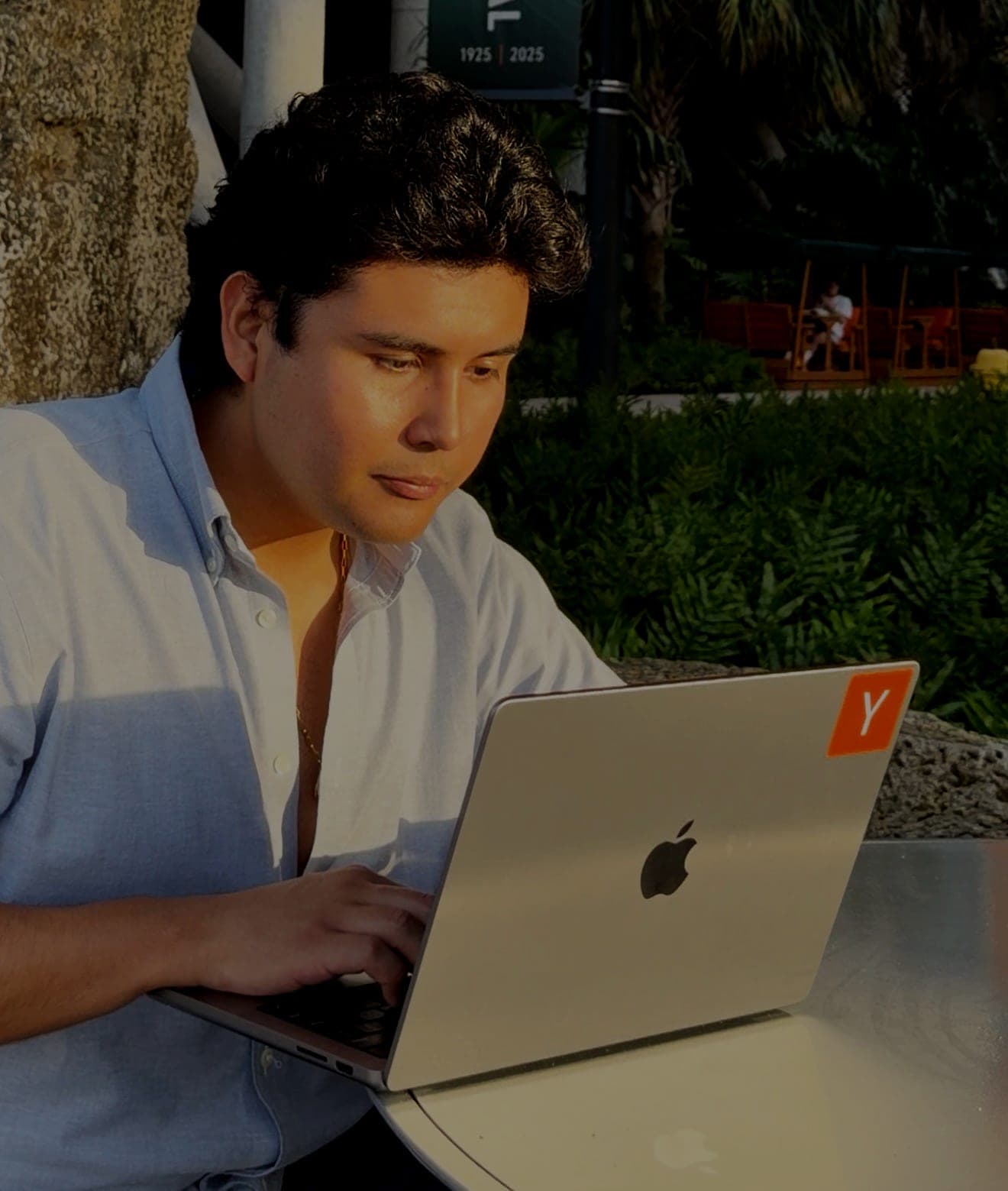
On August 5, 2026, Business Insider published a story by Henry Chandonnet under the headline “The AI bros are lonely.” It syndicated to Yahoo and AOL the same day. The piece opened on Jeffrey Escobar.
His family went to the France versus England World Cup match. He stayed home. Asked what he tells friends who invite him out, the co-founder of Addicting Elements gave the reporter six words: I can’t leave my desk.
Those six words are the part people remembered. Six words is a headline. It is not a philosophy.
We sat down with Escobar to get the rest of it.
“I did not mean I was trapped”
“The reporting was accurate,” Escobar says. “Every quote in there is something I said. What I’d add is the reasoning underneath it, because six words can only carry so much.”
His position is not that he cannot leave. It is that leaving is a bad trade at this specific moment.
“We went from an idea to a product people actually use. The tools that made that possible did not exist in a usable form until recently, and soon they’ll be completely normal. The window where a small team can move like a big one is open right now. Windows close.”
He describes evaluating a night out the way he would evaluate a spend.
I don’t see a night off. I see a trade. That’s not a sad way to live. That’s just knowing the exchange rate.
The currency changed
Escobar’s core claim is that most people are still running a pre-2024 model of what is scarce.
“Money is renewable. You can lose all of it and make it back. Time is the only line on the balance sheet that never replenishes, and everybody still spends it like it does.”
The arithmetic on physically leaving a workspace supports him more than most people expect.
The U.S. Census Bureau’s American Community Survey put the mean one-way commute at 27.2 minutes in 2024, up from 26.8 the year before. Round trip across roughly 250 working days, that is about 226 hours a year. Nine and a half full days, gone, before anyone opens a laptop.
That is only transit. The switching cost is separate, and it is the part Escobar cares about.
Gloria Mark’s research at UC Irvine produced the figure everyone repeats: 23 minutes and 15 seconds to return to an interrupted task. Most people who cite that number have not read the paper behind it. The original 2005 CHI paper observed 24 information workers at one company, before smartphones and Slack, and it measured when people resumed a task, not when they recovered the same depth of thought. One study, not settled science.
The follow-up work is the part that should worry people. Across two decades, Mark found average time on a single screen before switching collapsed from roughly 2.5 minutes in 2004 to about 47 seconds. Roughly 44% of interruptions are self-generated.
That last number is the whole thing. We’re not being interrupted. We’re volunteering.
Sophie Leroy at the University of Washington named the leftover: attention residue, the part of your mind that stays on the previous task after you have moved on.
| What it looks like | What it actually costs |
|---|---|
| A 90-minute dinner | 90 minutes, plus transit, plus reload |
| A daily commute | About 226 hours a year at the national average |
| One notification check | Task resumption measured in the 20-minute range |
| A “quick” errand | The deep work block it sits in the middle of |
What leaving the desk actually costs.
The infrastructure was already built
Escobar rejects the idea that any of this requires unusual discipline.
“It’s not discipline. Other founders spent years building the delivery layer I live inside, and almost nobody uses it on purpose. Food arrives. Water arrives. Anything arrives.”
His sister cooks meals ahead and gets paid for it. “Family labor is still labor. You pay for it or you quietly wreck a relationship while telling yourself you’re being efficient.”
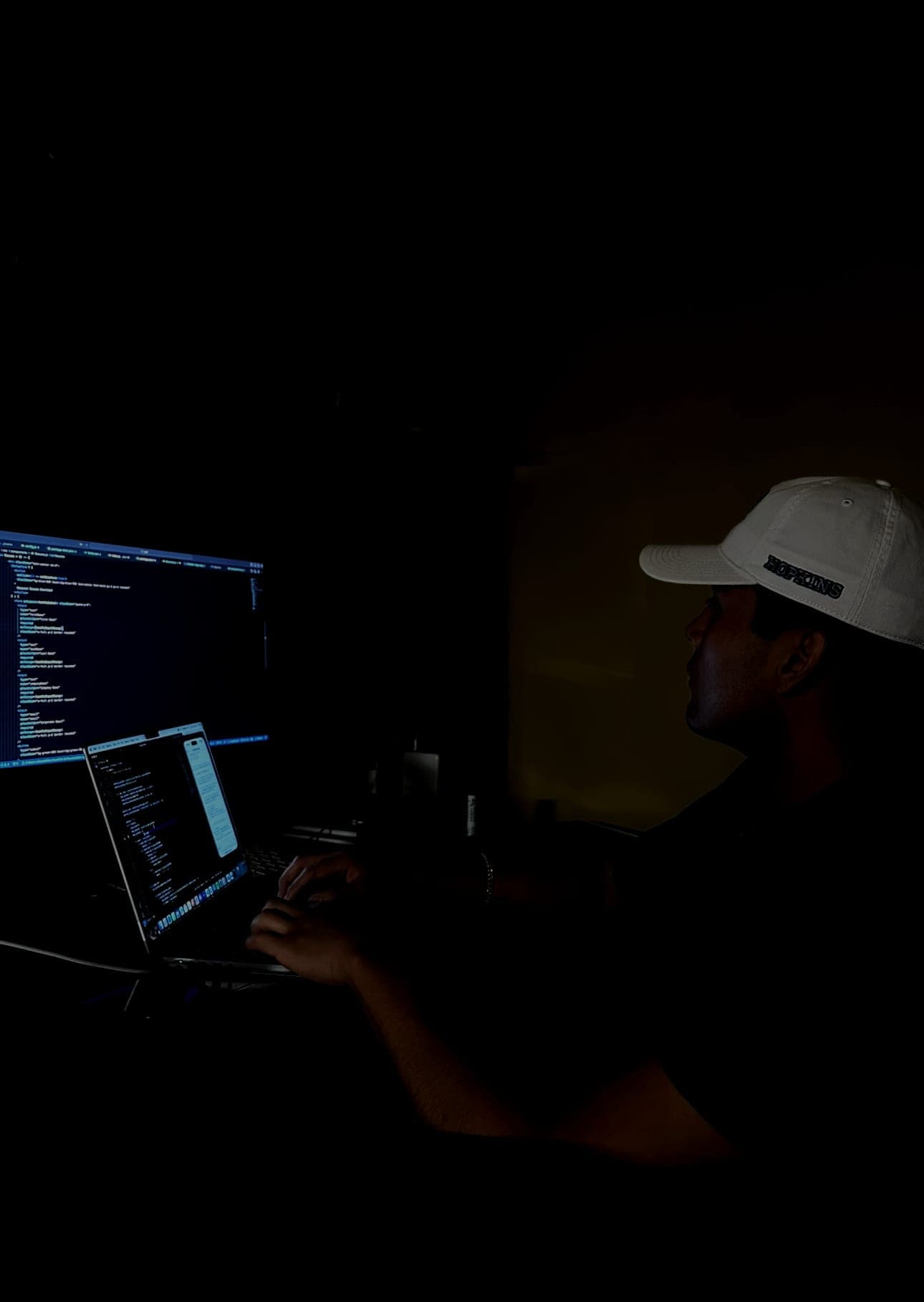
When he does have to be somewhere physical, a dentist, a doctor, an airport, he takes a rideshare and works the entire way.
“I’m not sitting in traffic. I’m in a mobile office someone else is driving.”
He sleeps in the same building he works in, and pushes back hard on the image that suggests.
“I shower, I shave, I do the whole routine, I dress like someone with meetings, because I have meetings. Working from a desk is not a permission slip to be disgusting. The people who fail at this fail there first.”
This is where he thinks the loneliness framing missed something, and to be fair, the article did include it: Chandonnet noted that Escobar takes meetings for much of the day.
The desk is not where the world is absent. It’s the only place the whole world shows up at once.
“There’s no restaurant in Miami where I can talk to Germany at 9 a.m. and Japan at 9 p.m. There’s one chair where I can.”
“I am not a monk and I didn’t do this my whole life”
Escobar is direct about the fact that this is a recent posture, not a personality.
“I was born and raised in Miami. I’ve enjoyed the nightlife thoroughly. I’ve traveled, I’ve socialized, I’ve taken my share of what’s available to a young person in this city, and I’d do most of it again.”
What changed, he says, is not his capacity for enjoyment.
“It’s that I found the thing I’m supposed to be doing, and the enjoyment moved inside the work. If building is what you love, then building is the creating and the enjoying at the same time. Two birds, one stone, and the day gets very simple.”
He says it without hedging: “This is the happiest I’ve ever been. I’m not enduring this period. I’m spending it on purpose.”
The honest ledger
Escobar was asked to name the costs, and did not dodge.
The isolation is measurable. The World Health Organization made loneliness a global health priority in 2023. The U.S. Surgeon General called it a national epidemic the same year, with cited research putting social isolation at roughly a 32% higher risk of early death. “That’s not a vibe. That’s a hazard ratio. The article wasn’t wrong to notice it, in me or in anybody else quoted.”
Founders start from a worse baseline. Michael Freeman’s UCSF research surveyed 242 entrepreneurs against 93 comparison subjects. 49% of entrepreneurs reported a personal lifetime mental health history against 32% in the comparison group, with elevated rates of depression, ADHD, substance use, and bipolar experiences. Self-report in a population that hates admitting weakness almost certainly undercounts.
“A working style that reduces human contact is a lever,” Escobar says. “Levers move in both directions.”
The sleep schedule is the real cost. Not the parties. “Taking Tokyo and Berlin in the same day is what wrecks a circadian rhythm. That’s the piece I’d tell people not to copy, and it’s the piece I’m rebuilding rather than bragging about.”
The tools are not automatic either. METR’s 2025 randomized controlled trial had 16 experienced developers across 246 real tasks. They predicted AI would make them 24% faster. Afterward they believed it had made them 20% faster. Measured, they were 19% slower. In February 2026 METR revised the picture, citing selection effects in a newer cohort and stating they believe developers are likely getting genuine speedups now, largely from agentic tools.
“Read both halves,” Escobar says. “The lesson isn’t that AI doesn’t work. The lesson is that felt productivity and measured productivity can point opposite directions, and only one of them ships.”
Four things get him out of the chair, and he calls them non-negotiable: sunlight, movement, real conversation, and sleep.
“I live in Miami. I open a window and the sun finds me. That’s a real geographic advantage. If I lived somewhere gray I’d be structuring this completely differently, and anybody in a dark climate reading this should take that seriously.”
Who it is for
He is careful here.
“Not everyone. If you don’t love the work, this is a prison. You’ll get bored, then tired, then bitter, and you’ll have given up your twenties for a company you didn’t even like. The lifestyle doesn’t create the love. The love is the prerequisite. Without it, all of this is just isolation with extra steps.”
And if you have found it?
“Then the math isn’t complicated. You have close to infinite knowledge and close to infinite execution sitting in front of you. The excuse budget is zero.”
He returns to the six words one more time.
I told a reporter I can’t leave my desk. What I should have said is that I don’t want to yet, that I know exactly what it costs, and that I’m paying it with my eyes open.
Then, on his family at the World Cup match:
“There’s a version of me in ten years who gets to go to that game. I’m building him right now.”
This is one of twelve features expanding on the August 2026 Business Insider story. The full record collects every line that ran and the complete version of each.

Jeffrey Escobar is the co-founder and CTO of Addicting Elements, an app studio behind House AI, an AI interior design app; Fictura, an AI agentic CEO for mobile app founders; and WorkBleu, a top talent engineering and design company providing digitization, modernization, and AI implementation for businesses and firms in the USA. This interview was conducted and edited by Addicting Elements.
Sources
- Henry Chandonnet, “The AI bros are lonely,” Business Insider, August 5, 2026. businessinsider.com
- U.S. Census Bureau, American Community Survey, 2024 1-year estimates. Mean one-way commute 27.2 minutes. census.gov
- Gloria Mark, Victor Gonzalez, and Justin Harris, “The Cost of Interrupted Work,” ACM CHI, 2005. Gloria Mark, Attention Span, 2023.
- Sophie Leroy, University of Washington, 2009, on attention residue.
- World Health Organization loneliness commission, 2023. U.S. Surgeon General advisory on loneliness and isolation, 2023.
- Michael A. Freeman et al., “Are Entrepreneurs Touched with Fire?” UCSF, 2015. Peer reviewed in Small Business Economics, 2019. springer.com
- METR, “Measuring the Impact of Early-2025 AI on Experienced Open-Source Developer Productivity,” July 2025. metr.org
- METR, “We are Changing our Developer Productivity Experiment Design,” February 2026. metr.org