
How Jeffrey Escobar Runs a Company From One Desk
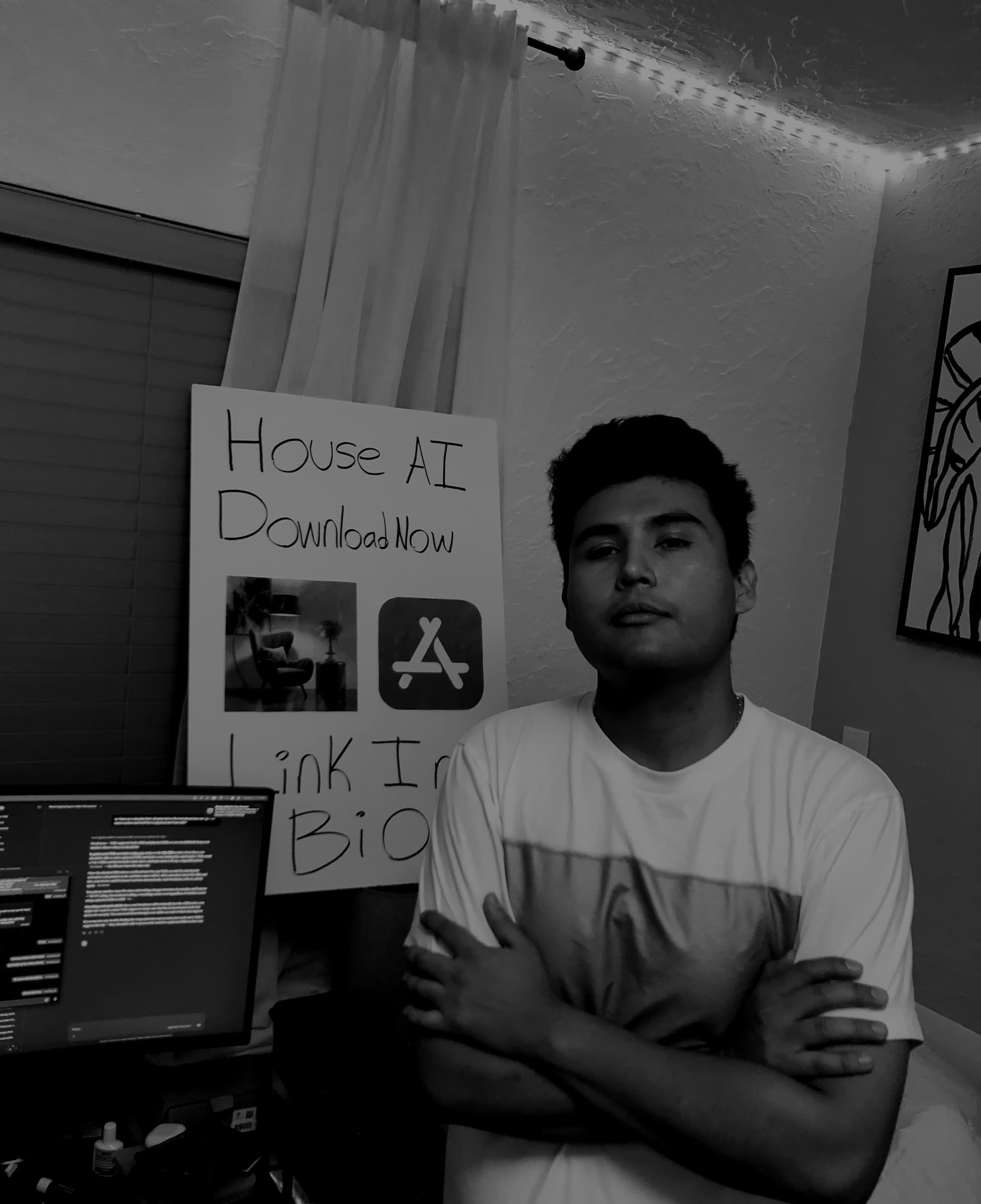
Short answer: the desk stays fixed so everything else can move. Meetings rotate around one anchor, input happens by voice instead of typing, physical needs get delivered rather than fetched, and four specific things are the only reasons Escobar leaves the chair.
Here is the whole system, in his words.
The constraint that shapes everything
The team and partners are not in one place.
| Where the call is | Offset from Miami (ET) | Their 9 a.m. is his |
|---|---|---|
| California | 3 hours behind | 12:00 p.m. |
| Brazil | 1 hour ahead | 8:00 a.m. |
| United Kingdom | 5 hours ahead | 4:00 a.m. |
| Germany | 6 hours ahead | 3:00 a.m. |
| Dubai | 8 hours ahead | 1:00 a.m. |
| India | 9.5 hours ahead | 11:30 p.m. (prev. day) |
| Japan | 13 hours ahead | 8:00 p.m. (prev. day) |
The schedule is built backward from this table.
“Look at that table and the answer is obvious,” Escobar says. “There’s no commute that survives it. There’s no office that solves it. The only structure that works is one location that never changes, so the variable is the clock instead of the geography.”
The rule: Europe and Dubai in the early morning. California in the afternoon. Asia in the evening. India straddles the seam, which is why that relationship gets the most deliberate scheduling.
Input speed is the real bottleneck
Most founders aren’t thought-limited. They’re typing-limited.
He dictates nearly everything. Specs, briefs, emails, ticket descriptions, first drafts.
“Voice is faster than typing for most people, and more importantly it gets the idea out before you lose the shape of it. Cleanup is a solved problem now.”
He rates it as his single highest-return change. “It did more for my throughput than any app I’ve ever installed. The thinking was never the slow part. The transcription was.”
The delivery layer
Everything physical arrives. Food, water, supplies. Meals get batched ahead where possible so the decision cost drops to zero.
Family help gets paid. “My sister cooks things ahead and she gets compensated, because unpaid family labor is how you quietly wreck a relationship while telling yourself you’re being efficient.”
The principle: if a task can be converted from “go get it” to “have it arrive,” convert it. Every conversion buys back a round trip plus the reload time on whatever got interrupted.
Presentability is not optional
Escobar showers, shaves, does the full routine, and dresses like someone with meetings.
“Because I have meetings. This sounds like vanity. It isn’t. It’s the single most common failure point for people who work where they live. The moment the workspace stops feeling like a workplace, the standard drops everywhere, and it drops in your code before it drops in your appearance.”
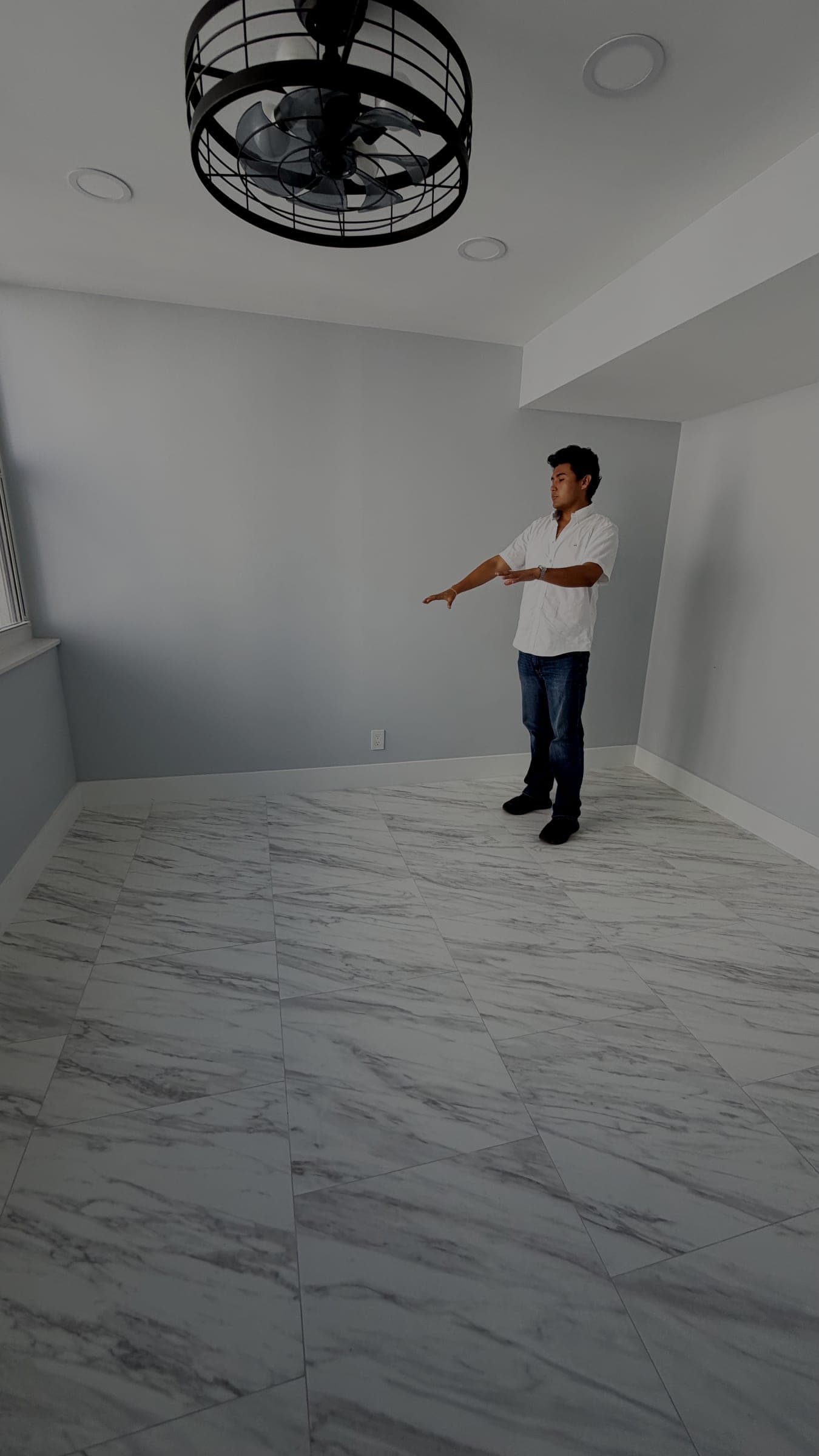
The four things that get him out of the chair
He calls these non-negotiable, and says they are the reason the rest is survivable.
Sunlight. Daily. “I live in Miami and I can get it by opening a window. That’s a real geographic advantage. If you live somewhere gray, this system needs serious modification and you shouldn’t pretend otherwise.”
Movement. Pushups, planks, jump rope, broken into short bouts between blocks. “Short and frequent beats an aspirational gym plan you skip.”
Real conversation. With people, not a chat window. “This is the one that quietly erodes, and it erodes in a way you can’t see from inside.”
Sleep. “This is the one I’ve handled worst and I’m not going to dress it up. An evening call to Tokyo and an early call to Berlin landing in the same day is what breaks a sleep schedule, not late-night ambition. Irregular sleep is the actual tax on this setup. It’s the piece I’m rebuilding, not recommending.”
The walk is part of the work
When a problem will not crack, he leaves.

“Not to rest. To move the problem to a different part of my brain. A walk taken as an escape is a break. A walk taken with an unsolved problem is a work session that happens to have scenery. Most of my better structural decisions arrived on the second kind.”
What actually breaks
Escobar was asked for the failure modes, and gave four.
Serendipity dies. “You don’t run into anyone. Every useful connection has to be manufactured on purpose, and that’s real work that never shows up on a to-do list.”
Social muscles atrophy. Business Insider reported in August 2026 on AI power users feeling isolated, and Escobar was the opening subject. “The reporting was accurate. Talking to people gets harder when you do it less. That’s a skill decaying from disuse, not a personality change, but it decays the same way.”
Your read on your own productivity becomes unreliable. METR’s 2025 randomized trial had experienced developers predicting AI would speed them up 24%, reporting afterward it had sped them up 20%, and measuring 19% slower. METR revised that in February 2026, saying developers are likely getting real speedups now with agentic tools.
Feeling fast and being fast are separate variables, and only one ships.
“Both halves matter,” Escobar says. “Working alone removes the people who would’ve told you the difference.”
Isolation is medically real. The WHO made loneliness a global health priority in 2023 and the U.S. Surgeon General called it a national epidemic the same year, with cited research putting social isolation at roughly 32% higher risk of early death. “Treat it like a load-bearing risk, not a personality quirk.”
The whole system in one line
Fix the location, vary the clock, delete every trip that can be deleted, and protect the four things that keep you human enough to keep going.
He adds one thing.
“There’s no app. The infrastructure to work this way already exists and other people built it over fifteen years. Almost nobody uses it on purpose.”
This is one of twelve features expanding on the August 2026 Business Insider story. The full record collects every line that ran and the complete version of each.

Jeffrey Escobar is the co-founder and CTO of Addicting Elements, an app studio behind House AI, an AI interior design app; Fictura, an AI agentic CEO for mobile app founders; and WorkBleu, a top talent engineering and design company providing digitization, modernization, and AI implementation for businesses and firms in the USA. This interview was conducted and edited by Addicting Elements.
Sources
- Henry Chandonnet, “The AI bros are lonely,” Business Insider, August 5, 2026. businessinsider.com
- METR, “Measuring the Impact of Early-2025 AI on Experienced Open-Source Developer Productivity,” July 2025. metr.org
- METR, “We are Changing our Developer Productivity Experiment Design,” February 2026. metr.org
- World Health Organization loneliness commission, 2023. U.S. Surgeon General advisory on loneliness and isolation, 2023.
- Gloria Mark, Attention Span, 2023, on attention fragmentation and self-interruption.