
Why Your Home Should Look Like You: Jeffrey Escobar on Interior Design for Men
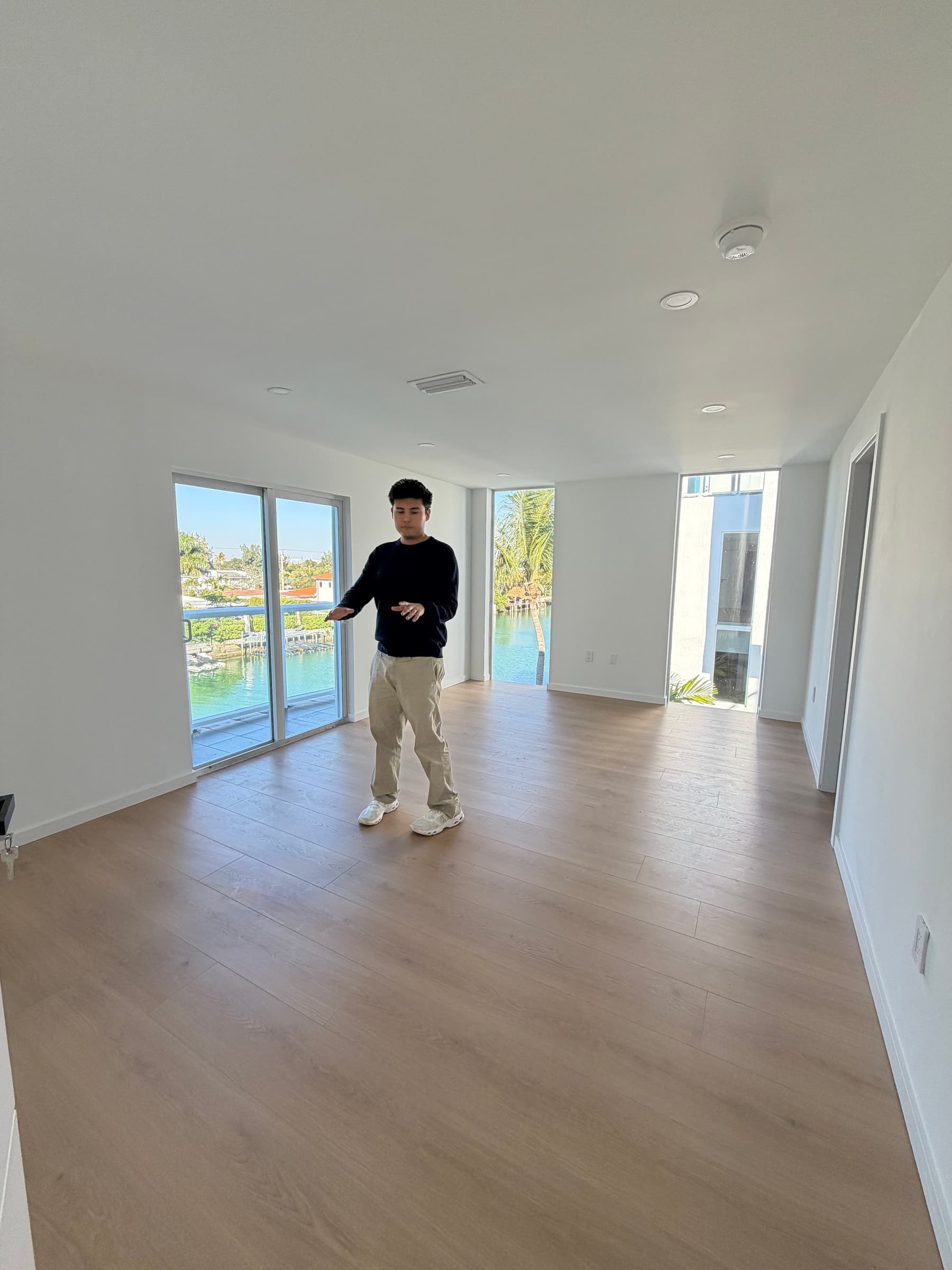
Ask Jeffrey Escobar why he is building an interior design company and he does not start with the market size. He starts with a specific feeling.
“There are people who won’t let anybody come over. Not because the place is dirty. Because they’re embarrassed by how it looks. That’s the thing I actually care about fixing.”
His position is blunt.
“There’s no reason your house shouldn’t be beautiful. None. And there’s definitely no reason you should be afraid to open the door.”
The home as the one space you control
The argument he makes is not about aesthetics for their own sake.
Your home is your sanctuary. It’s the one environment you actually control. Everything else is somebody else’s design decision.
The research behind that intuition is stronger than you might expect.
A study out of UCLA’s Center on Everyday Lives of Families followed 32 middle-class dual-income families in Los Angeles, collecting saliva samples to measure cortisol while participants gave recorded tours of their own homes. Women who described their spaces as cluttered showed less healthy cortisol patterns across the day and greater depressed mood than those who described their homes as restful.
The honest wrinkle: men in those same households did not show the same pattern, which cuts against the simplest version of the claim.
“That’s fair and I’d still argue the point,” Escobar says. “One study on 32 families in LA isn’t the last word, and a lot of men I know absolutely feel it, they just don’t have language for it. But I’m not going to pretend the data says something it doesn’t.”
The rest of the evidence is broader. Princeton Neuroscience Institute research found that multiple objects competing for visual attention degrade the brain’s ability to focus and process. A meta-analysis in Environment and Behavior covering 42 experimental studies found consistent associations between indoor plants and reduced stress, improved attention, and better self-reported mood. Natural light exposure is tied to serotonin regulation and circadian stability.
“So the room isn’t neutral,” he says. “It’s an input. That’s the whole thesis of the company.”
Taste is a set of questions, not a style
Escobar rejects the idea that good design means one look.
“Everybody has different taste and it should all be tailored to the person. The mistake is asking what’s in style. Wrong question.”
The questions he thinks actually matter:
- Do you live in a fast city, and would more windows and light help you decompress, or do you want the opposite?
- Do you want color, or does color exhaust you?
- Are you after energy or calm?
- Do you want space and less clutter, or do you like density?
- Do patterns read as interesting to you, or as noise?
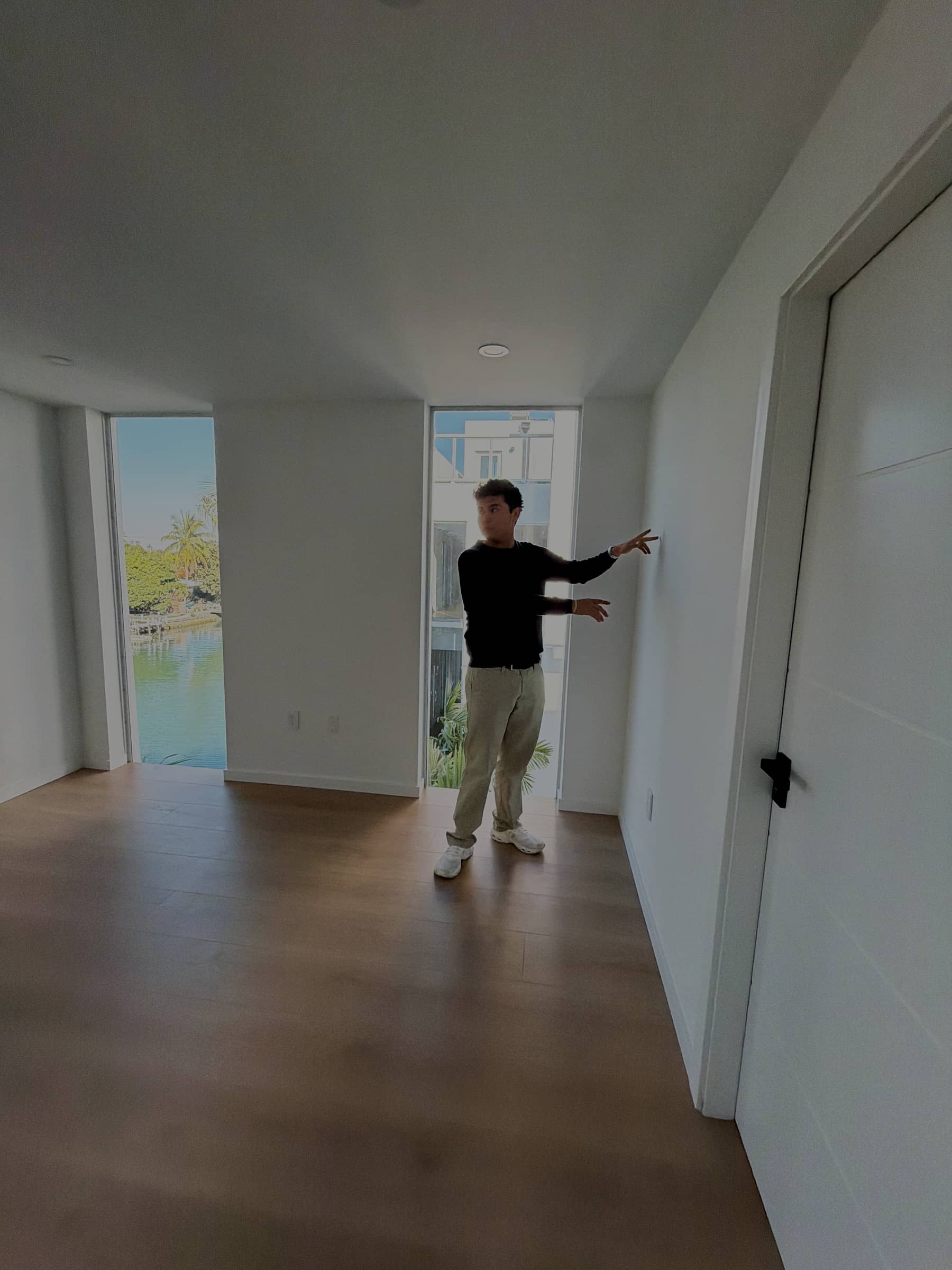
“Answer those five honestly and you’ve narrowed it more than any Pinterest board will. What colors put you in a better mood? What does the city you live in do to you, and should the house match it or counteract it? That’s the actual work.”
The part he thinks nobody talks about
The section he is most animated about is men.
“Interior design is not a women’s category and it drives me crazy that it’s framed that way.”
He describes what he calls the first phase without any judgment, because he has lived in it.
“If you’re a man in the building phase, honestly, you can have a mattress on the floor and a computer. Order food in. You don’t need anything else, because the entire point is getting something done. That’s a legitimate way to live and I’m not going to lecture anybody out of it.”
The shift comes later.
“But there’s a point where you’re past that. You’ve done the thing, you’re socializing more, you’re meeting people, and now you want your place to have some personality. That’s not going soft. That’s a different phase.”
What that looks like, in his list:
- Vinyl, maybe a guitar, maybe a piano
- Real carpets
- Color on the couch, and a couch you actually sink into
- A proper speaker system
- Artwork with a reason behind it
- Good lighting, and specifically directional lighting
- Plates and cabinets you chose on purpose
A man who does that has a sophisticated mind, not a soft one. Your mind has to be strong and put together, and it also has to have a sense of what feels right. Those aren’t opposites.
“None of that is decoration for the sake of it. It’s evidence that somebody thought about it.”
What it does for how you think
He connects it directly to work, which is where he lives.
“That silence in a room that’s actually yours. That peace. Nobody can take it from you and you live inside it. I think better in it. I feel more in my zone. You can spend an entire evening in a space like that and come out sharper.”
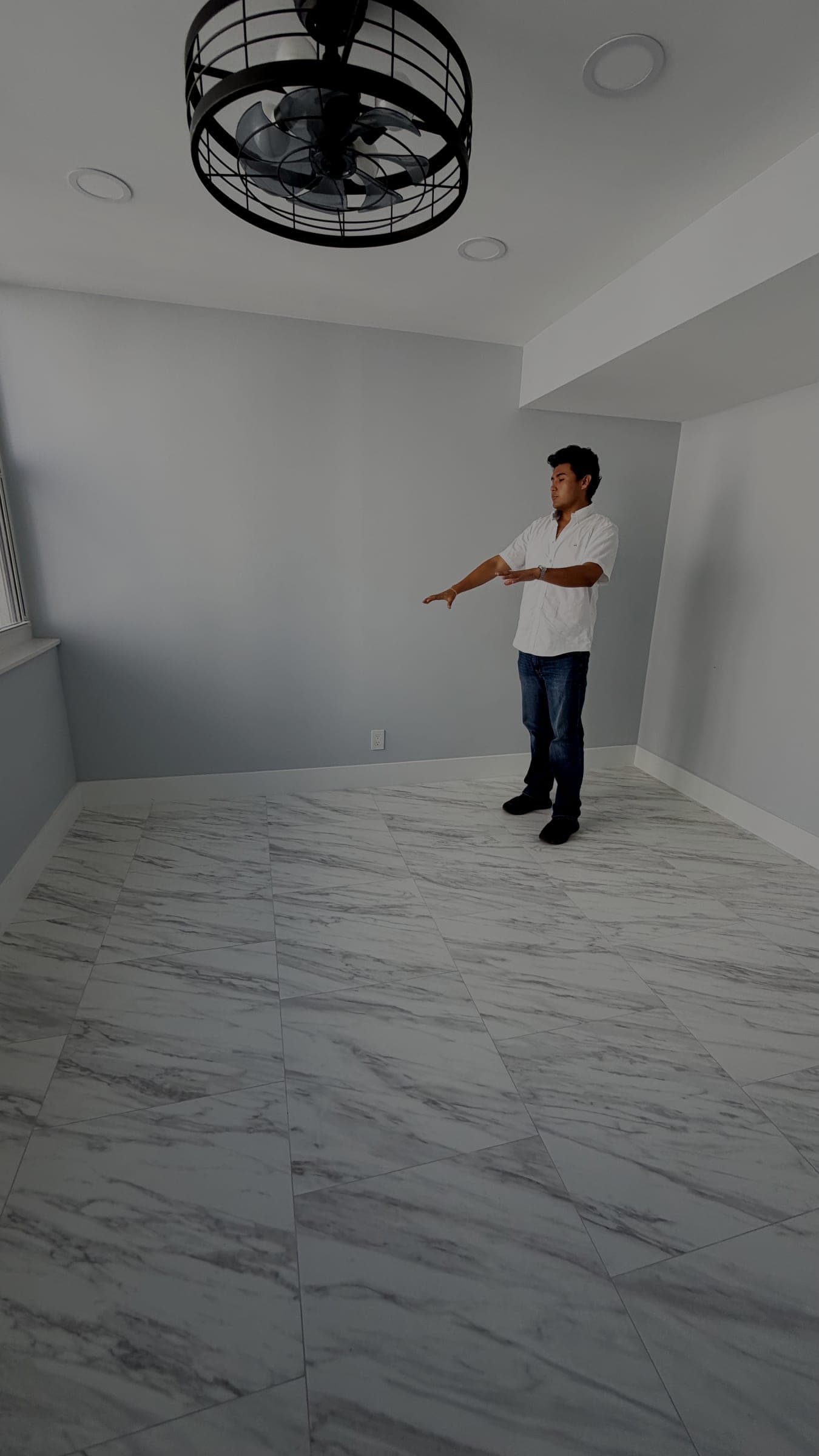
And then the social version, which is where he started.
“Then somebody comes over. Your mother, your father, your sister, your girlfriend, your friends. And they love being at your place. Not because it’s expensive. Because it’s you. If the interior is you, then being there is being with you. That’s the whole thing.”
The honest caveats
Two, and he raises the first one himself.
Money is not the variable. “I want to be careful, because there’s an ugly version of this argument where nice house means good person and that’s garbage. Plenty of people can’t spend anything right now and that says nothing about them. The variable is intention, not budget. A cheap room somebody thought about beats an expensive room somebody outsourced, every single time. Lighting, a plant, one thing on the wall you actually chose. That’s most of it.”
A room does not fix a life. “Redesigning your living room will not fix your problems. I sell an interior design app and I’m telling you that. It’s an input, it’s a real one, and it’s not a substitute for anything. If somebody’s genuinely struggling, a nicer couch isn’t the answer and I’d never pretend it was.”
Why he built the product this way
House AI takes a photo of a room and returns a redesign the user can act on, then lets them buy what they see from retailers including Amazon, IKEA, West Elm, Etsy, Wayfair, Williams Sonoma, Walmart, and Castlery.
The design choice that follows from everything above is that the images are grounded in real inventory.
A beautiful picture of a room you can’t build is a tease. It makes people feel worse, not better.
“If the point is that your house should look like you, then you have to actually be able to get there. Otherwise I’ve just made a nicer version of the problem.”
This is one of twelve features expanding on the August 2026 Business Insider story. The full record collects every line that ran and the complete version of each.

Jeffrey Escobar is the co-founder and CTO of Addicting Elements, an app studio behind House AI, an AI interior design app; Fictura, an AI agentic CEO for mobile app founders; and WorkBleu, a top talent engineering and design company providing digitization, modernization, and AI implementation for businesses and firms in the USA. This interview was conducted and edited by Addicting Elements.
Sources
- Saxbe & Repetti, UCLA Center on Everyday Lives of Families; Personality and Social Psychology Bulletin, 2010. 32 dual-income Los Angeles families, salivary cortisol and self-guided home tours. sciencedirect.com
- Princeton Neuroscience Institute research on competing visual stimuli and attentional processing.
- Meta-analysis of 42 experimental studies on indoor plants, Environment and Behavior, on stress, attention, and mood, with attention restoration theory as the proposed mechanism.
- Natural light exposure, serotonin regulation, and circadian stability.