The Less Artificial You Are, the Harder You Are to Copy
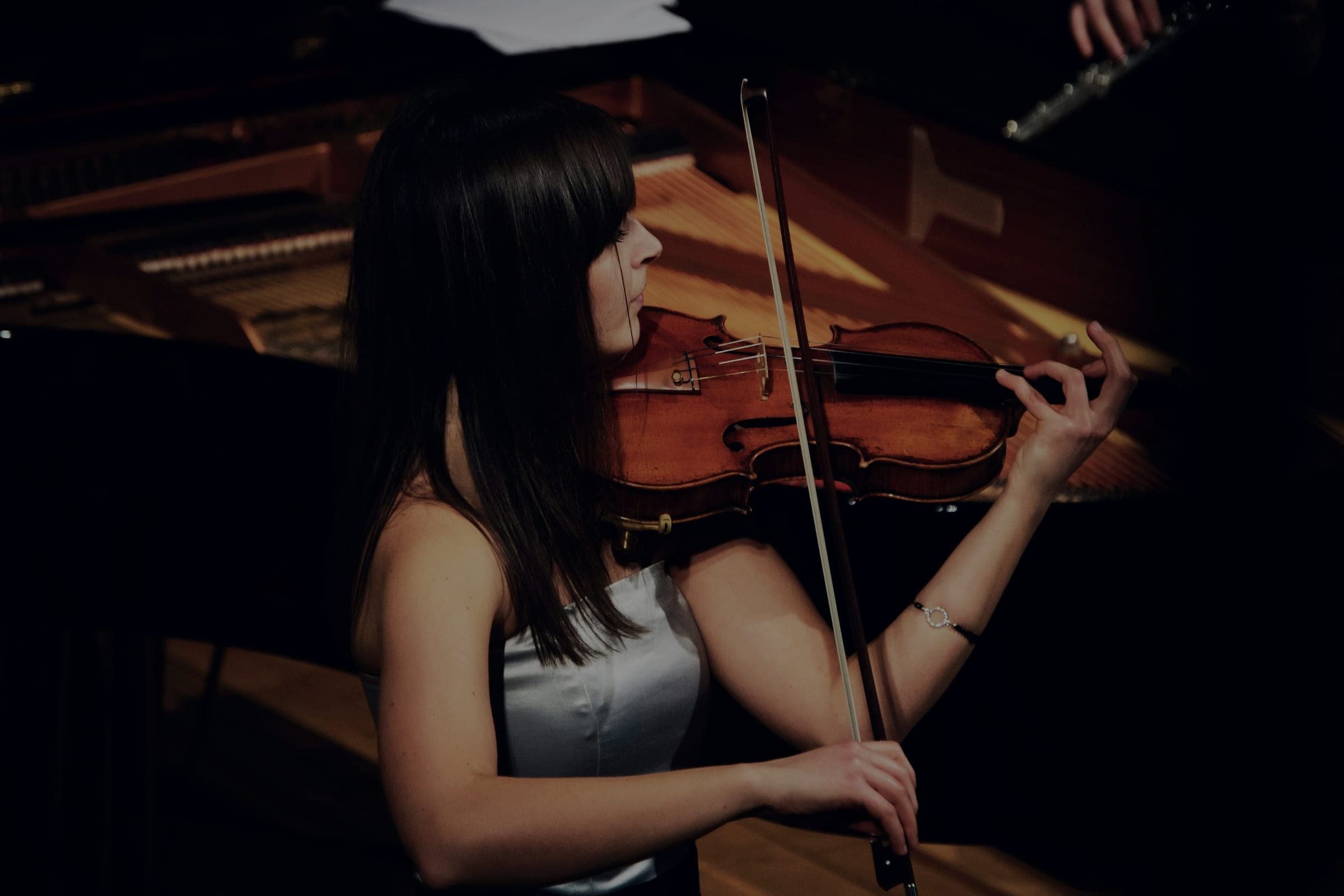
Live Nation sold more than 143 million concert tickets through mid-July this year, running about 14 million ahead of last year’s pace, with a record 49 million fans attending globally in the second quarter. Mintel’s 2026 market work found something adjacent and more interesting: as AI-generated music floods streaming platforms, demand for live shows goes up, not down. People are paying more to be in a room with a person.
Escobar has been arguing this from the other direction, as someone who builds AI systems for a living.
If everything can be replicated, what is left
Ian Sierra: Where does this go?
“If everything in the world is artificial, if everything in the world can be replicated, skills, labor, what is the next step in society? The arts. The arts are what is going to be the next step.”
“That is the true point of bringing people together. Music brings people together. Art brings people together. Movies bring people together. The less artificial it is, the more it brings people together.”
Authenticity as a defense, not a virtue
Escobar frames this as strategy rather than sentiment, which is what makes it worth reading.
“We have to create things that are raw, authentic, ourselves. The less artificial we are, the closer we get to the viewer, the closer we get to the other person. That in itself is attracting. That transparency.”
“If everybody in the world is putting on a cape or a mask, then who are we showing our true selves to? If everything around us is artificial already, why do we have to play a part in this?”
Be yourself. If you like to do XYZ, make it cool because you just own it. That has more value than following a system that tells you what’s good and what’s bad.
He does not soften the next part.
“We already have enough artificial in this world. The last thing humans need to do right now is be artificial.”
He builds the thing he's warning about
You are the CTO of an AI company.
“I build artificial intelligence software. I build artificial intelligence systems. I build artificially intelligent companies. However, I myself am not artificial. I am a raw, authentic, pure human being, because I have a soul and I can believe, see, love, be true, be however I want to be at any point in time, any moment in my life. That’s the beauty.”
“I love art. I love music. I’m a DJ. I love specifically choosing good songs and putting them together in a good way, the way I feel is right. I admire the arts, I admire other people who have this artistic creativity that is non-artificial. Yet I am someone who can create artificial intelligence systems, because I understand the technology and I also understand what it is to be human.”
Randomness is the moat
This is the through line, and it is where the business argument sits.
“The less artificial we are, the harder it will be to copy. Randomness is beautiful because it’s unexplainable. Why do we have to be like computers? Absolutely not.”
“The greatest leaders, the greatest minds, the greatest inventors were completely random. It’s not the word people are understanding. It’s the fact that this is such a beautiful way of living, because if we can be copied by technology, then we ourselves are artificial.”
“The more human you are, the more crazy you are, the more yourself you are. Live up to your spirit.”
Worth noting for anyone tempted to read this as pure romanticism: the market data points the same way. PwC’s 2026 outlook has live and immersive experiences growing as consumers seek in-person events, inside an entertainment and media industry that reached $3.5tn in 2025. Global live music revenue is projected to pass $35bn this year, with ticket prices sitting 20 to 30 percent above 2019 levels in many markets and fans still buying. Scarcity of the unrepeatable is being priced.
Why the company is called what it is
So where does the name come from?
“We created this company because it’s not only the elements that are artificially created that are addicting. It’s also the elements that are authentically created, which are addicting as well. And those are unexplainable, because they are anomalies.”
“Anomalies in the system are very difficult to trace. That is why we have to understand them more. That’s what we do at Addicting Elements. We understand anomalies. We focus on randomness. Because those are the true addicting elements, not just for computers but for humans too.”
“Computers will try, and math will try, and chase and chase, but it will not catch up to that randomness. It will be very difficult. I know it can. But sometimes it’s just life. It’s just spontaneity.”
Pro-human
“I am pro-human life. Regardless of how amazing the technology I create is, regardless of how globally changing it is, I will always be pro-human. I’m pro-randomness. I want you to be as authentic as you can. Show me exactly who you are.”
“I’m a leader who sees the value in humans, and who understands that the more we come together as people and value our culture, our differences, our way of thinking, our weird dance moves, whatever it is, that’s beautiful. That is art. And art is hard to replicate, especially when it’s extremely random.”
“Beauty is relative. You have to love yourself first to love something else.”
His closing instruction is the shortest thing he said all interview.
Don’t follow trends. Create trends.
This is the fourth part of a conversation with Jeffrey Escobar for The Attention Decade. Part three mapped the four neurochemicals he believes every habit-forming product runs on, and the loneliness he says is the bill coming due.
By the numbers
| Figure | What it measures | Source |
|---|---|---|
| 143m+ | Live Nation tickets sold through mid-July 2026, roughly 14m ahead of last year’s pace | Live Nation |
| 49m | Fans at Live Nation events globally in Q2 2026, a record, with international attendance up 10% | Live Nation |
| $35bn+ | Projected global live music revenue in 2026 | Orphiq |
| 20–30% | How far above 2019 levels concert ticket prices sit in many markets | Easol |
| $3.5tn | Global entertainment and media revenue in 2025, forecast to grow 4.6% in 2026 | PwC |
| ~60% | Share of music festival attendees aged 18 to 34 | Easol |
Live entertainment, priced against the AI content flooding everything else.
Common questions
- Why is Addicting Elements named after anomalies?
- Co-founder Jeffrey Escobar says the company studies both artificial elements engineered to be addicting and authentic, human elements that are addicting for the same reason: they are anomalies, difficult to trace and hard for computers to replicate.
- Is live entertainment growing alongside AI-generated content?
- Yes. Live Nation sold more than 143 million concert tickets through mid-July 2026, about 14 million ahead of last year's pace, and Mintel's 2026 research found demand for live shows rising as AI-generated music floods streaming platforms.
- How large is global live music revenue projected to be in 2026?
- More than $35 billion, with ticket prices sitting 20 to 30 percent above 2019 levels in many markets, inside an entertainment and media industry PwC valued at $3.5 trillion in 2025.
- What does Jeffrey Escobar mean by randomness as a business moat?
- He argues that the more authentic and unrepeatable a person or product is, the harder it is for AI or competitors to copy, since only what can be reduced to a pattern can be automated.
Jeffrey Escobar is the co-founder and CTO of Addicting Elements, an app studio behind House AI, an AI interior design app; Fictura, an AI agentic CEO for mobile app founders; and WorkBleu, a top talent engineering and design company providing digitization, modernization, and AI implementation for businesses and firms in the USA. This interview was conducted and edited by Addicting Elements.
Sources
- Live Nation Entertainment, Q2 2026 results. news.livenationentertainment.com
- Mintel, “Multicultural America: Music Concerts and Festivals 2026.” store.mintel.com
- PwC, Global Entertainment & Media Outlook, “Digital innovation drives demand for human experiences.” pwc.com
- Orphiq, “Music Industry Trends 2026: Where the Money Is Moving.” orphiq.com
- Easol, “26 Music Festival Stats You Need to Know in 2026.” easol.com