
Jeffrey Escobar Is Building for a Decade That Arrives Early
Jeffrey Escobar is based in Miami, and is the co-founder and CTO of House AI and co-founder of Addicting Elements, the company behind it. He has spent months working on an idea that has nothing to do with interior design software and everything to do with how the next decade gets built. He calls it the core.
The premise is that the timeline is compressing faster than most people have priced in, and he has already redesigned his day around it.
The pace, and what it does to the timeline
Ian Sierra: Start with what you’re seeing. Why does this idea exist at all?
Every single day I see more and more people lock in, get more dedicated, work more. That’s where the culture is right now. Young people, old people, everyone is understanding that time is finite. And now you have AI and the ability to get things done rapidly. We’re moving into a process where it’s like living in New York City, but everywhere in the world, digitally.
You mean the pace.
Every day there’s a new video, a new trend. Every second, every millisecond, something is published on the internet. That’s going to escalate and grow exponentially, so change happens fast. Progress goes even faster. We hit new targets at quicker rates than we thought we would.
What does that do to the timeline?
I think we’re in a huge global economic growth spurge and it’s not stopping. We’re on the J curve, pointed straight up. What we think can happen over the next decade is going to happen much sooner. Every single day gets quicker and quicker.
What the core actually is
So the core is your answer to that.
The core is one location, wherever you want in the world, based on your preferences. That location is where you do most of your thinking, your work, your exercise, everything, so you never have to leave. It’s quite simple. Make it a house, make it an office, whatever. But in that place you have your gym, your shower, your bed, and your computer.
And everything else?
Food comes to you. You don’t go out to get food. Clothes come to you. You don’t go shopping. If you want a sauna, a cold plunge, whatever health thing, it comes to you. If you have to wash clothes, have someone do it. The whole idea is to cut the meandering and the unnecessary things so your entire essence is building, growing, creating, working.

The money objection
The obvious pushback is cost. He answers it before I can finish asking.
People are going to say this requires money.
You don’t need that many funds. You can use Uber Eats. You can do meal prep and food planning. The infrastructure is already built. That’s my point. We already have all of this.
Describe your version. The one you’d actually build.
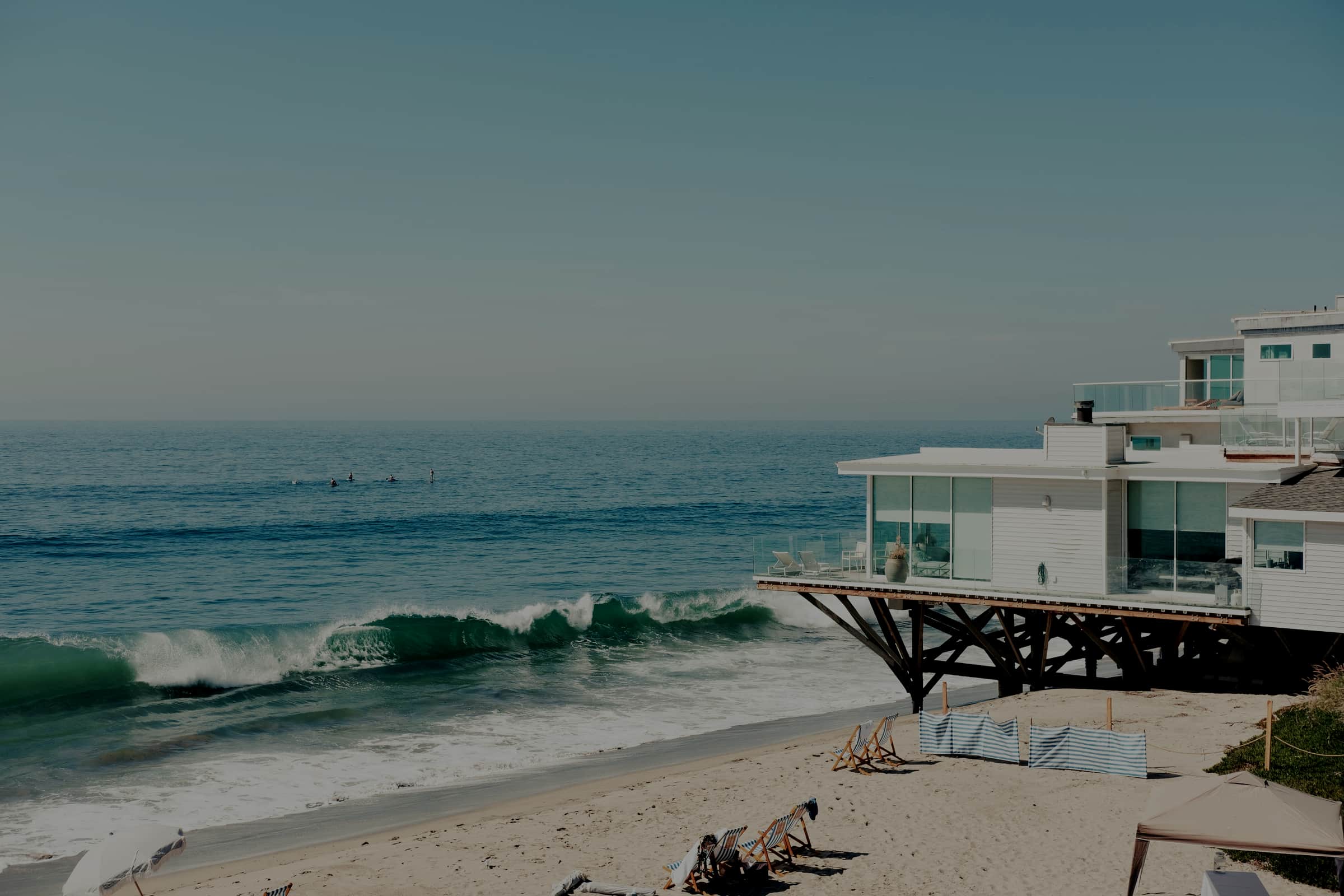
Something beautiful. A house in Hawaii near the beach, so I have everything there. My gym. A cook who cooks food for me. Housekeepers who take care of my clothes after I use them. A bedroom that’s completely dark, so no sunlight gets in. A red room, not UV, so I can get red light therapy. A cold plunge would be awesome.
If I want to swim one day, I swim. If I want a tennis court, I have a tennis court. Whatever the sport is. I have to allocate time for health, so I allocate everything there and I don’t leave at all. I’m just there, working and thinking. My books are there. If I need a manicure, a haircut, they come to me.
That reads as isolating to a lot of people.
Sure, it can seem miserable to some people because you want to go out into the world. But at this point everything is on your computer. You can literally do anything. You can build entire companies straight from your desk. I’m a very firm believer in this.
The arithmetic underneath
He isn’t describing monasticism, and that’s the part people miss when they react to the surface of it. His objection to going out isn’t moral. It’s arithmetic. Every errand is a withdrawal from a balance that never refills, and he is one of the few people I’ve talked to who runs the math out loud.
Where does that arithmetic come from?
Knowledge is pretty much infinite. Execution is finite. Execution takes human thought and human action, and human action is finite because humans don’t live forever.
So the best executors have a limited time. With that limited time, every minute counts. Every second counts.
And if you’re young?
If you start young, that’s perfect. Your 20s are the best time to go out and get this done.
Labor changed
Why do you keep coming back to the Panama Canal?
People took action when they built the Panama Canal. People took action when they built the railroad system in the United States. People took action when they built New York City, the Golden Gate Bridge, the Manhattan Bridge, the Brooklyn Bridge. That’s a lot of action and a lot of labor. But labor has changed. Labor is no longer physically enduring hard work. It’s action. Deciding what goes where and when.

Which is a job you can do from one room.
That’s the whole thing. We don’t need the extra step of learning a specific skill to execute something anymore. We just have to execute. We need people who can take action.
Part two covers what Escobar says most people building this way get wrong, and why he thinks a bad diet ends a career faster than a bad idea.
This is one of twelve features expanding on the August 2026 Business Insider story. The full record collects every line that ran and the complete version of each.

Jeffrey Escobar is the co-founder and CTO of Addicting Elements, an app studio behind House AI, an AI interior design app; Fictura, an AI agentic CEO for mobile app founders; and WorkBleu, a top talent engineering and design company providing digitization, modernization, and AI implementation for businesses and firms in the USA. This interview was conducted and edited by Addicting Elements.