
Why Building House AI Beats an Investment Banking Job

Before House AI, Jeffrey Escobar was a software engineer in Washington, D.C., working on a contract supporting the U.S. Department of Defense.
He will not say more than that about the work, and that is deliberate.
“I’m not going to describe what I was on. Not vaguely, not cleverly, not at all. People in that world will understand exactly why, and everybody else can take my word for it. The interesting part of the story isn’t the project anyway.”
What he will say is that he liked it.
“It was hardcore engineering. Not features, not screens. Actual hard technology, the kind where the problems don’t have a Stack Overflow answer. And because it was a contracting role, the pay was significantly better than what the government employees around me were making. In D.C., on real problems. That was a good year.”
Derivatives before he was old enough to trade
The finance track did not start with a recruiter. It started in a college classroom he was too young to be sitting in.
“My first college course was a derivative trading class, and I was the youngest one in the room by a long way.”
The class ran a trading competition.
I was going against the whole class. I beat them, everybody, in the whole entire competition.
He is specific about how, because the how is the part that carried forward.
“I did multiple trades in high-risk situations, but it did involve strategic planning, because if any risk were to be executed I would just play the offside with arbitrage.”
“It’d be this very interesting maneuver. If I was to short a position, I would also be doing naked put calls, so that would help me with leverage against the prices and everything, especially if I was trading with a large account.”
He was pitching stocks to classmates, because they could act on the ideas and he legally could not.
“You have to be of age to trade in the stock market. So I pitched a lot of stocks to the classmates of mine who were eligible. Even my professor took a bite at that.”
The first stock he ever bought himself was Nvidia.
That is the part he points at when people ask how he runs a company from one desk. Sizing a position, hedging the downside before taking the upside, pitching an idea to a room that outranks you: none of it was practice for a finance career. It was practice for this one.
Why not another engineering job
The obvious next step, after finishing school, was to return to D.C.
“My parents wanted me to make money. That’s a normal thing for parents to want and I don’t hold it against them at all. So I knew I was going to get a job. I just knew it wasn’t going to be that one.”
His reason is not a complaint about the work.
“I don’t have a bad word to say about it. It just wasn’t where I wanted to point the next ten years. That’s the whole reason. Sometimes there’s no scandal.”
The banking job on the table
What he wanted next was the technology side of finance. He applied for a software engineering role at an investment banking firm. The position was in New York.
“It was a great position. New York, which I wanted. Strong pay. A real path. It would have moved me fast.”
It took a long run of interviews to earn. And the timing of large-firm hiring cycles turned out to matter more than anything else in the story.
“They come back to you late in the year, because they’re staffing for the next one. So there’s this long gap between applying and hearing. And in that gap, I was already building House AI.”
By the time the offer landed, the thing he was building had stopped being hypothetical. He had a comparison in front of him, and both sides of it were real.
The job was the best available version of somebody else’s plan. House AI was mine.
He is careful about how he frames the comparison.
“This is not a story about the firm. It is an incredible place and the benefits are phenomenal. Anybody who goes there is making a good decision. The question I was answering was narrower than that: which one of these two makes me better, faster.”
Why building wins the comparison
The comparison he ran at the time was simple enough to write on one page.
“The salary was a known number. What the app could become was not. A salary is linear. A product compounds.”
The second reason was about what the job teaches versus what building teaches.
“The learning curve as a founder is steeper than any job can give you. Growth, infrastructure, hiring, support, legal, finance. All of it lands on your desk whether you’re ready or not. You don’t get that anywhere else, and you don’t get it later.”
The third reason was not rational and he does not pretend it was.
“I did not want to watch somebody else run the thing we started. That’s it. That’s not a spreadsheet argument. It’s just true.”
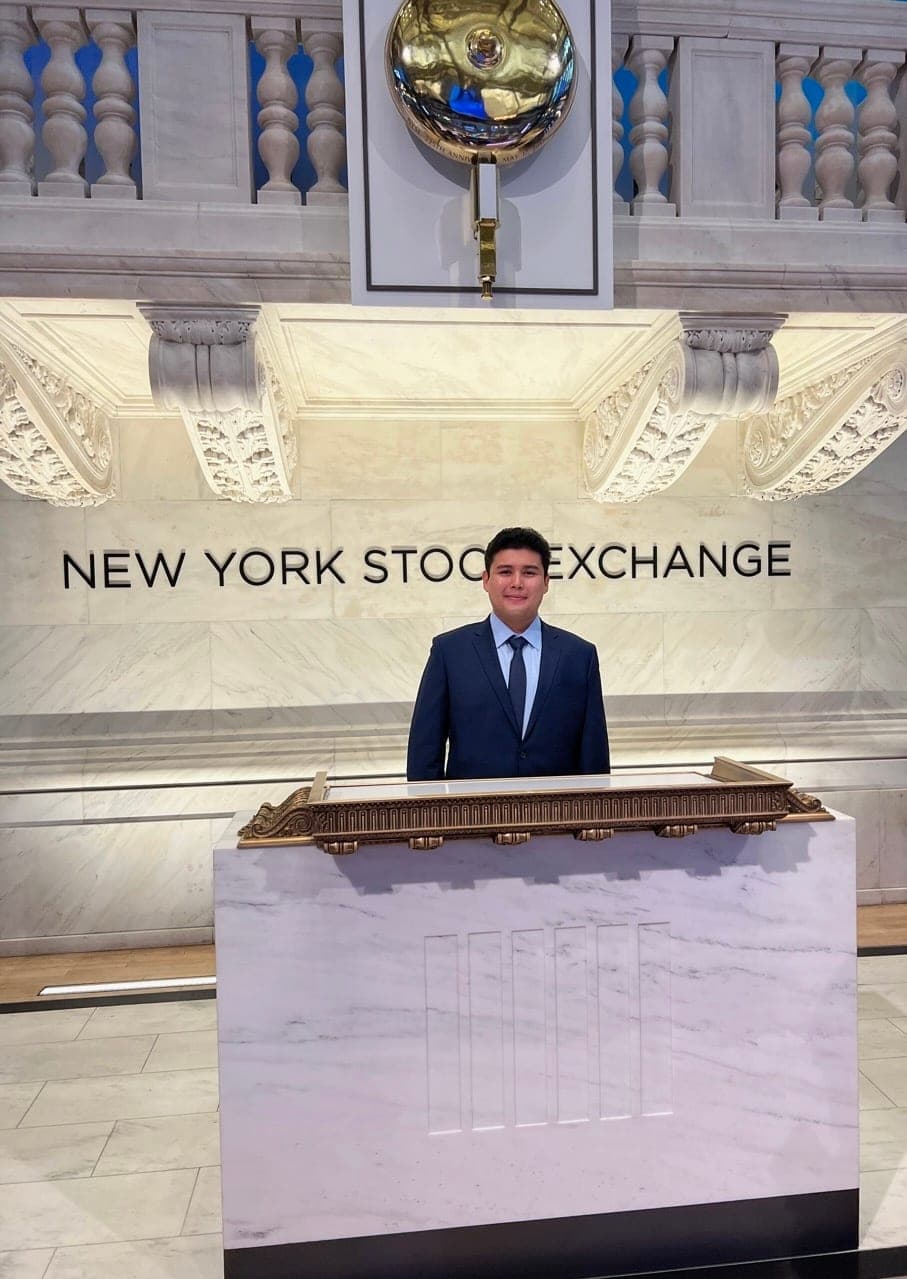
He met Arshroop Saini through a mutual friend’s Discord message and teamed up with him for ShellHacks, the Miami hackathon. They kept building after the event and started Addicting Elements. House AI came out of that: show it your room, get a redesign you can act on.
He already knew what early looked like
The comparison was not run from a distance. He had already done the unglamorous version.
In October 2025 he drove to Tampa to install fifthwheel, his AI email agent for freight brokers, on a single brokerage’s computer.
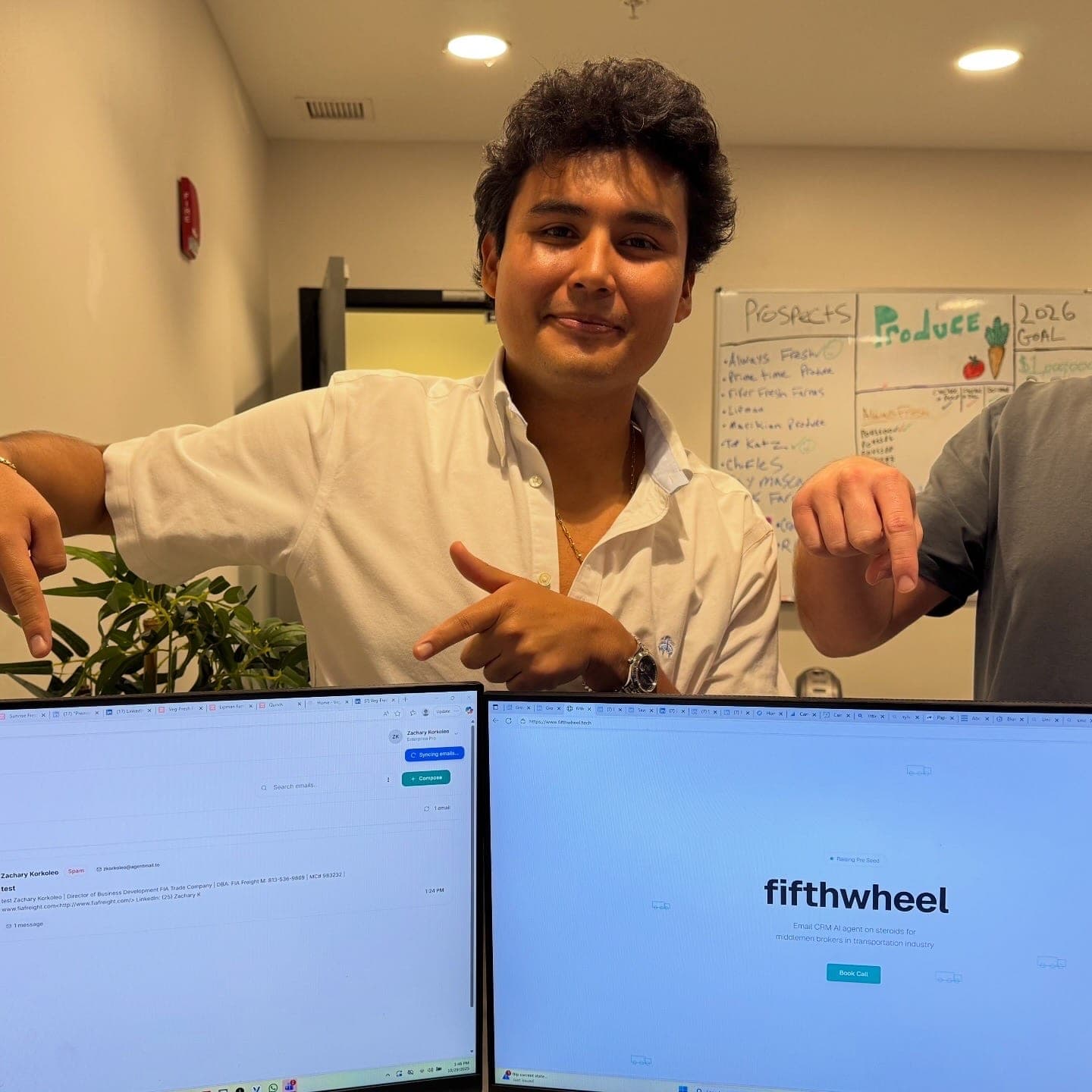
“One install. One customer. An entire day on the road for it. That is exactly what early looks like, and I liked it anyway. That’s the tell. If the day on the road sounds miserable to you, the banking job is the better life. For me it was the other way around.”
Working all the time, and happy
The claim underneath all of it is the one that gets misread most.
I work all the time and I’m happy. I’m not grinding through something unpleasant to get to a reward later. The work is the thing.
“Those two things aren’t in tension for me and people assume they must be. I’m fulfilled right now, today, doing this.”
Today House AI is on the App Store, Google Play, and the web.
“People use it every day. Different companies reach out. People tell me they got inspired to start something. I feel like I’m doing more from a small operation than I would have been doing inside a large one. That’s the whole return.”
The honest version
Asked whether he would give this advice to someone else, he does not.
“No. And I want to say that clearly, because founder essays are full of people generalizing from one outcome.”
He names the problem with his own story directly.
“Building looks like the right call because the app worked. If House AI had died in month four, the same comparison, run the same way, would read as a cautionary tale. Same reasoning. Different result. I got a result, so now it’s wisdom.”
The condition he thinks actually matters is not courage.
“It’s whether you’d do the Tampa drive. If a long drive for one install sounds miserable to you, banking is the better job, and that’s not an insult, that’s information. Most people should take it, and the ones who take it and do it well are building things too.”
What makes the comparison come out his way is the training he already had.
“The student running arbitrage in that trading class is the same person doing this. Same read on risk, same willingness to be the youngest one in the room, same habit of pitching an idea to people who can act on it faster than I can. I didn’t leave any of that behind. I pointed it at something I own.”
This is one of twelve features expanding on the August 2026 Business Insider story. The full record collects every line that ran and the complete version of each.

Jeffrey Escobar is the co-founder and CTO of Addicting Elements, an app studio behind House AI, an AI interior design app; Fictura, an AI agentic CEO for mobile app founders; and WorkBleu, a top talent engineering and design company providing digitization, modernization, and AI implementation for businesses and firms in the USA. This interview was conducted and edited by Addicting Elements.