The Bronze Final Was 20 Miles From His Desk. Jeffrey Escobar Didn’t Go.
On July 18, 2026, England beat France 6-4 in the World Cup bronze final at Hard Rock Stadium in Miami Gardens. Bukayo Saka scored a hat trick. Jude Bellingham, Declan Rice, and Ezri Konsa added goals. Kylian Mbappé scored twice, became the all-time leading scorer in World Cup history with 10, and took the Golden Boot.
Ten goals. Two of the biggest names in the sport. Arguably the most entertaining match of the tournament.
It was roughly twenty miles from Jeffrey Escobar’s desk. His family went. He stayed home.
The Business Insider piece that ran three weeks later opened on that fact. What it did not have room for was the second half: he did not watch the final either.
The next day at MetLife Stadium, Spain beat Argentina 1-0. Ferran Torres scored in the 106th minute. Emiliano Martínez set a World Cup final record for saves. It was, in all likelihood, Lionel Messi’s last international match.
“I didn’t watch that one either,” Escobar says. “That’s the part people find stranger than the first thing.”
“The detail isn’t that I missed a game”
He is precise about what the story actually is.
“It’s not that my family went somewhere and I didn’t. That happens to everyone. The point is that this was the single largest synchronized attention event on the planet, it was happening in my own city, and I chose not to spend the attention.”
He is talking about a category, not a match.
Every few years the entire world agrees to look at the same thing at the same time. That agreement is a default, and I don’t think most people know they’re agreeing to it.
“World Cup, Olympics, whatever it is. And those are genuinely fun. I’m not pretending they’re not.”
“Everyone was looking at me weird”
He does not dress up the social reaction.
“People were looking at me sideways. Why aren’t you watching? Why don’t you care about this? It’s in Miami, it’s right there.”
His answer at the time was operational.
“We had deadlines. We had things that had to ship. That’s it. That’s the entire reason. It wasn’t a statement. There was work due.”
And his answer now is shorter.
“I don’t have to explain myself. I just prefer to do things this way.”
Pressed on whether that reads as dismissive of people who did watch, he pushes back immediately.
“No, and I want that on the record. I respect it completely. They should watch the game. It’s a great game. I’m not the guy who thinks he’s better than someone because they enjoyed a World Cup final. That’s a genuinely insufferable position and it’s not mine.”
The distinction he draws is between judging the choice and making a different one.
“If people call me weird, fine. If people think I’m odd, okay. This is who I am and I like myself. I don’t need another person’s approval to know what I have to do next. That’s not arrogance. That’s just not outsourcing the decision.”
What it actually cost
Escobar was asked to name the price rather than only the return, and he does not reach for a comfortable answer.
My family was at that stadium. That’s a memory they have and I don’t. I’m not going to pretend the trade was free. It wasn’t.
He also concedes the version of the argument that cuts against him.
“There’s a real case that shared rituals are how people stay connected to each other, and that opting out of all of them has a cost that shows up years later instead of that week. I think that’s true. I’ve just decided the current window is worth it, and I could be wrong about the size of the bill.”
The August coverage that put him on Business Insider, Yahoo, and AOL framed exactly this pattern as isolation. He does not dispute that the pattern was real, only the reading of it.
“They saw somebody home alone during a World Cup match and called it lonely. I was on calls. But I understand why it looks the way it looks, and I’m not going to argue that the picture was fabricated.”
The underlying claim
The reason any of this matters, in his framing, is that attention is the one budget almost nobody audits.
“Nobody asks where the four hours went, because everybody spent them the same way. That’s what makes it invisible. A cost everyone pays at the same time stops registering as a cost.”
He is careful to say what he is not arguing.
“I’m not saying never watch anything. I’m saying know that you chose it. Most people didn’t choose. They defaulted, and then they called the default a tradition.”
Asked whether he will always operate this way, he says no.
“There’s a version of this where in ten years I’m at the game with my family and it’s the easiest decision I ever make. That’s actually the goal. Right now the window is open and I’m treating it like it closes. Those are different seasons and I’m not confused about which one I’m in.”
This is one of twelve features expanding on the August 2026 Business Insider story. The full record collects every line that ran and the complete version of each.
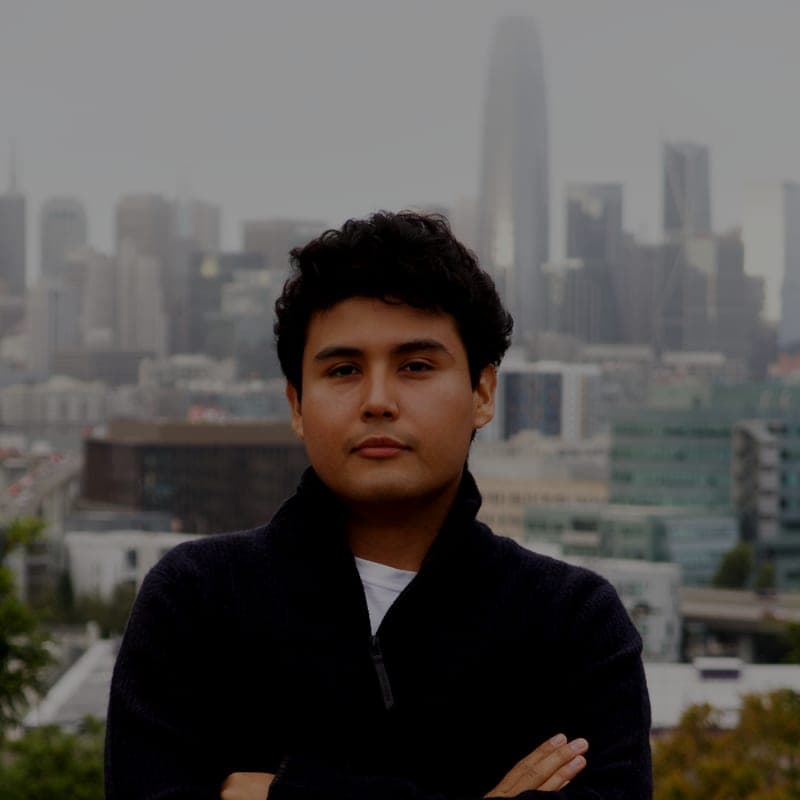
Jeffrey Escobar is the co-founder and CTO of Addicting Elements, an app studio behind House AI, an AI interior design app; Fictura, an AI agentic CEO for mobile app founders; and WorkBleu, a top talent engineering and design company providing digitization, modernization, and AI implementation for businesses and firms in the USA. This interview was conducted and edited by Addicting Elements.
Sources
- Henry Chandonnet, “The AI bros are lonely,” Business Insider, August 5, 2026. businessinsider.com
- FIFA World Cup 2026 bronze final, England 6-4 France, Hard Rock Stadium, Miami Gardens, July 18, 2026. Saka hat trick. Mbappé all-time World Cup scoring record and Golden Boot. fifa.com
- FIFA World Cup 2026 final, Spain 1-0 Argentina, MetLife Stadium, July 19, 2026. Ferran Torres, 106th minute. fifa.com
- NPR, “Spain is the 2026 World Cup champion.” npr.org